Discovery
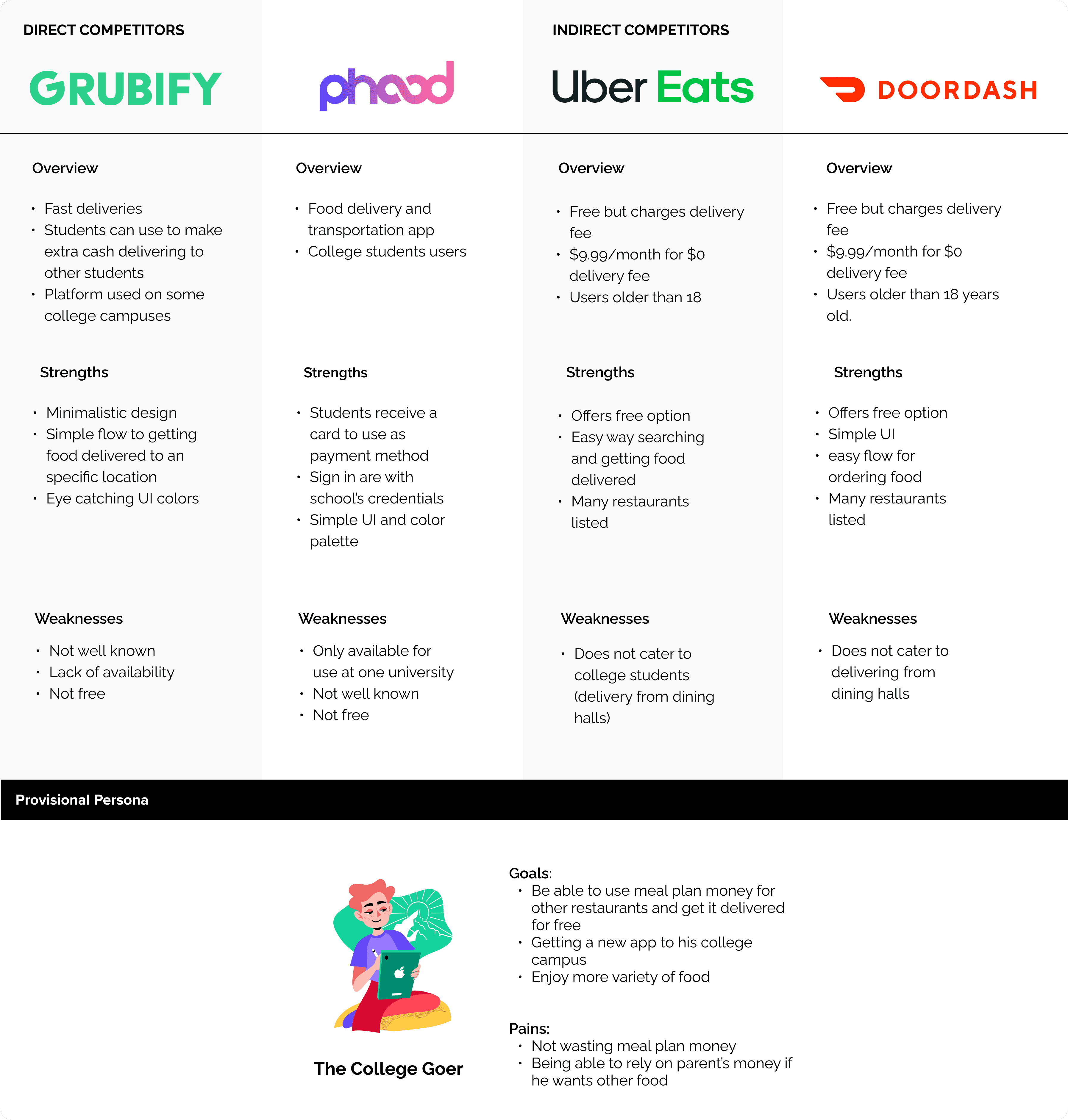
User Interview
I carried out interviews to assess user opinions on food delivery applications. I established well-defined aims and objectives for these conversations.
· Determine users' requirements, desires, goals, and irritations when utilizing delivery apps.
· Comprehend the distinctions between existing delivery apps.
· Identify the appealing characteristics of alternative delivery apps.

I interviewed four participants over the phone, with most of them in their 20s and one in their 30s. All of them used food delivery apps, with one using multiple platforms. Three participants were college students (two undergraduates and one graduate), and they all preferred simple, uncluttered delivery apps.
Primary Persona
I developed a character to better comprehend my target audience. This persona served as a guide when creating the meal delivery application.
Meet Jon!

Following a thorough analysis of the research data and persona, I developed an empathy map – a valuable tool for grasping the user's character by classifying their behaviors and emotions. This enabled me to gain a deeper insight into Jon's identity and the nuances of his daily life.


Let's discuss the user's journey.
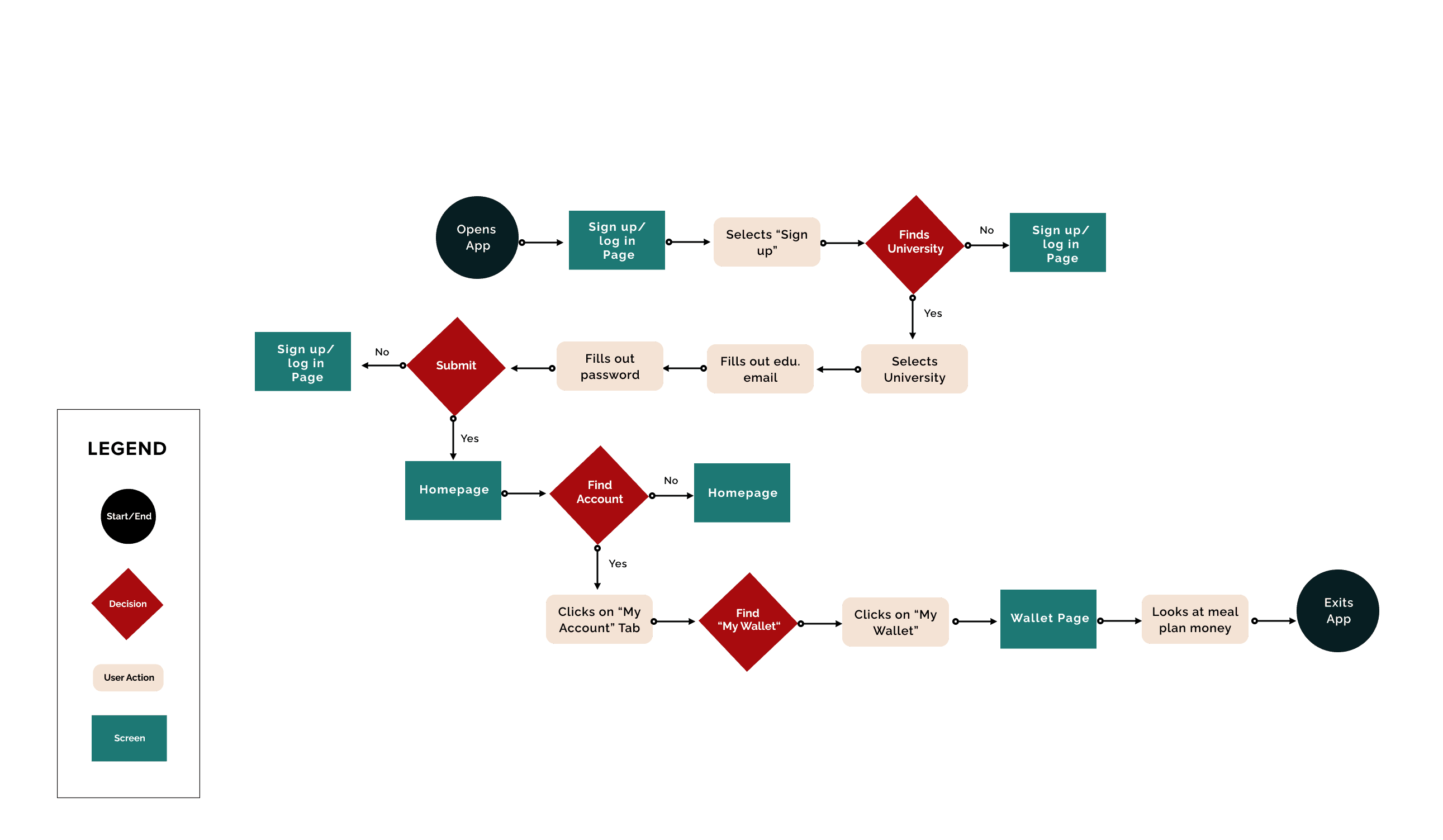
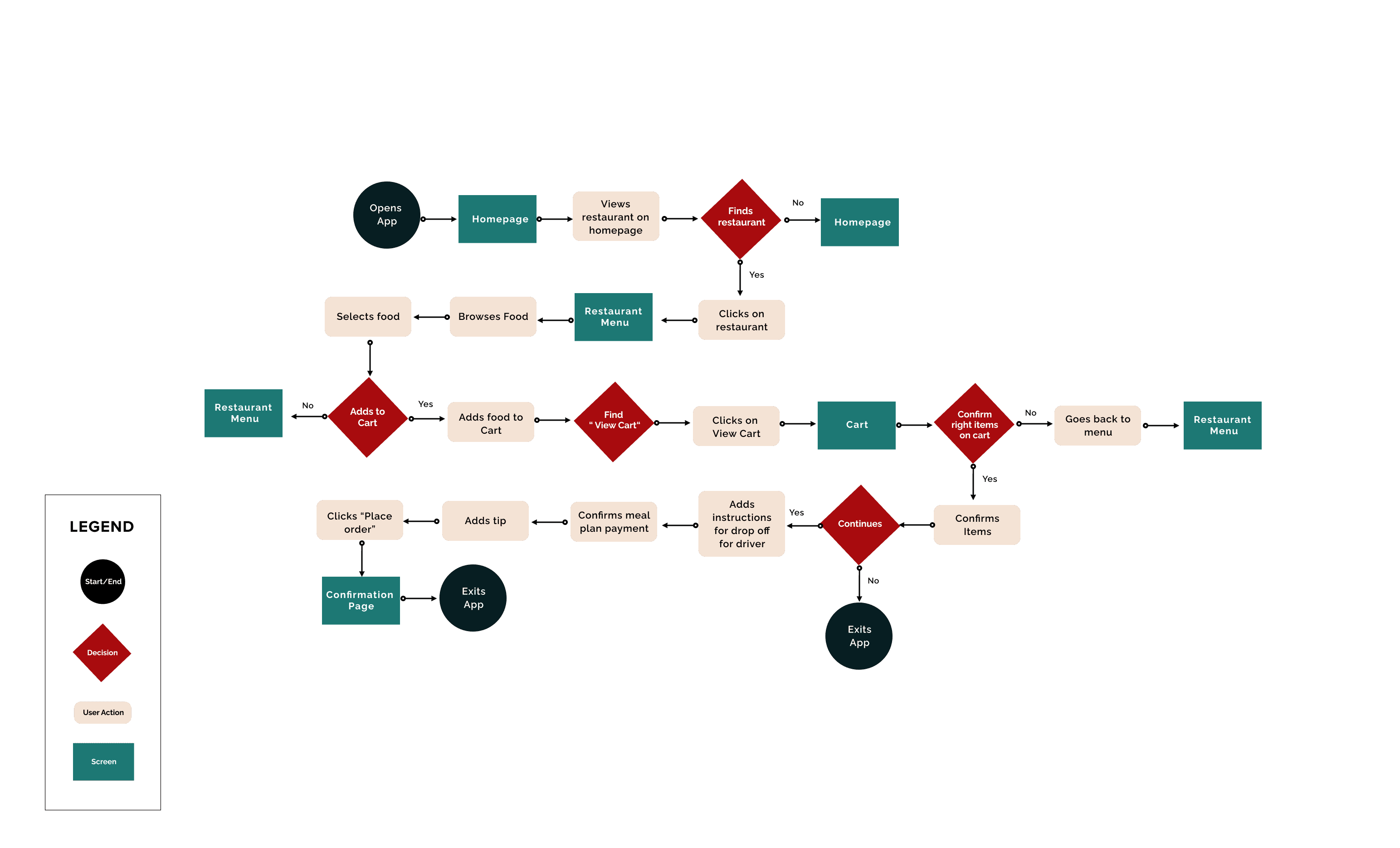
After defining the user, I developed a user flow to outline the steps for completing tasks within the product. This really help me to detect potential pain points or areas of confusion for users, leading to design improvements that enhanced overall user experience. This approach ensured an intuitive and user-friendly design. To further refine the process, I explored three scenarios to identify and address potential pain points.

Design
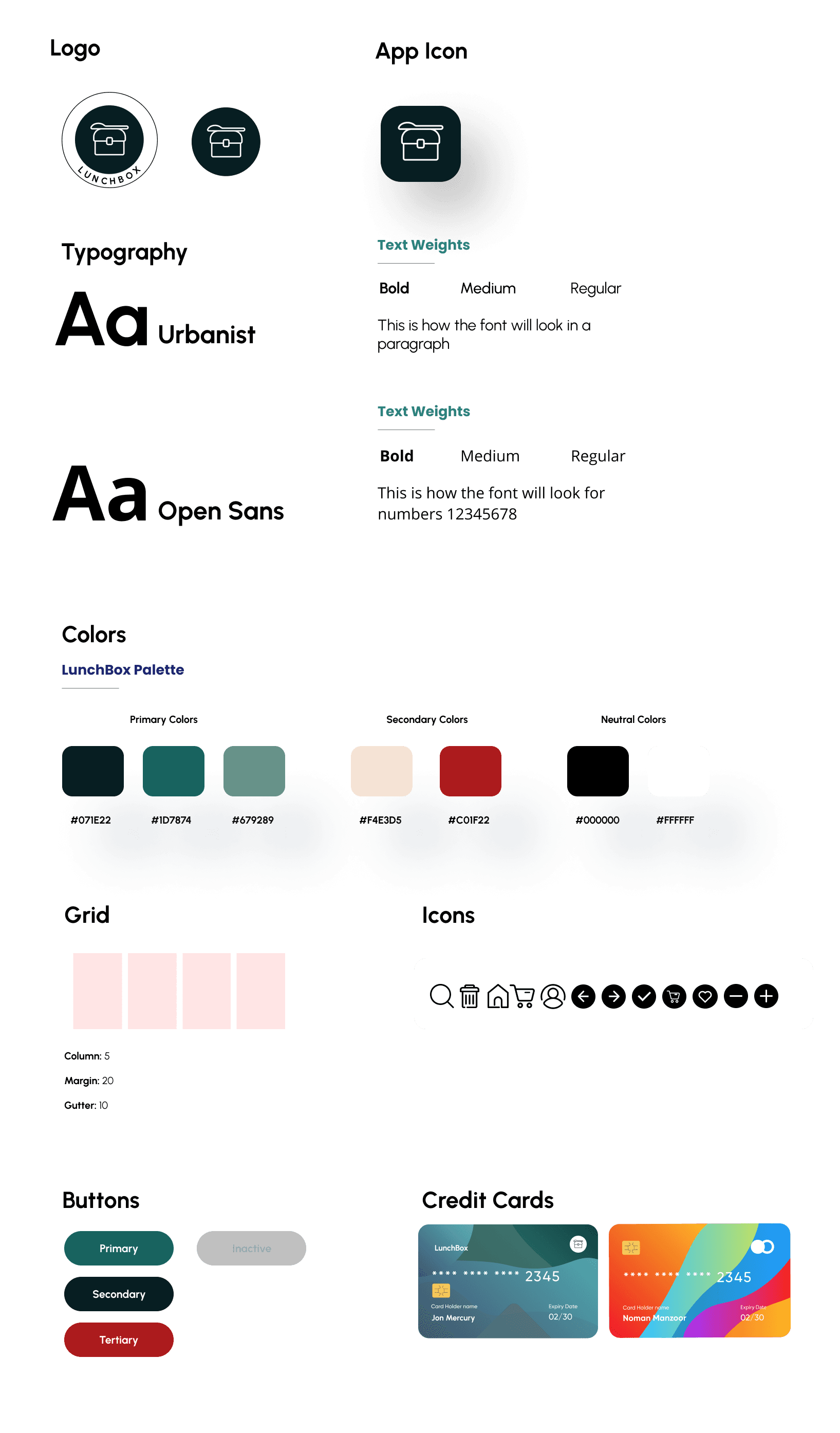
Upon completing the user flows, my thoughts shifted towards branding. I began drafting potential logo concepts for Lunchbox. To better visualize the logos digitally, I generated a file containing all the design variations. I managed to gather opinions from colleagues and ultimately chose the most fitting option for my vision of Lunchbox.
I then developed a UI Kit to standardize and streamline the components, guaranteeing uniformity and effectiveness throughout my designs such as buttons, form fields, icons, and other prevalent UI elements. This not only conserved time and energy but also helped me concentrate on making unique designs based on user needs.

Making wireframes
Utilizing the insights gathered from interview research and user flow scenarios, I rapidly drafted various design concepts in my sketchbook. This enabled the early identification of potential issues and design hurdles, permitting me to tackle them prior to devoting significant time and energy into a finalized design. Sketches assisted in visualizing the user journey and engagement within a design, which is essential for the development of a smooth and instinctive user experience.

After finishing the initial sketches, I began creating detailed wireframes using Figma. These wireframes acted as a foundation for the prototyping stage, improving the assessment of user experience.

Utilizing the high-fidelity app prototype, I initiated scheduling for usability tests, opting for Zoom. Throughout the interviews, there were several aspects I considered. I wanted to evaluate the design flow to help identify what were the main pain points when using the app. Gathering feedback enhanced the design and user experience throughout the app.


Reflection
A significant learning experience from this project was recognizing the value of user research in the design process, as it involved creating an application from scratch. Through interviews and surveys, I gathered essential insights about users' desires, motivations, and challenges. These details were instrumental in shaping design choices during the prototype phase.
The mobile-first design methodology's significance came to light. The app's design had to be tailored for compact screens and touch-based interactions, necessitating a distinct design strategy compared to conventional web-based apps. It enabled me to appreciate the need to design while considering the device's abilities and constraints. In summary, this project enhanced my comprehension of the UX design process for mobile applications and how user research and testing contribute to a more efficient and user-friendly product. I eagerly anticipate applying these teachings to future mobile app design projects.
Next Steps
Although this project was hypothetical, it's crucial to think about the next stages in a real-world scenario. I would conduct another round of usability testing to evaluate the design improvements and identify any remaining issues before the development phase. After additional usability testing, iterate and test once more to collect further feedback!